
Financial Statements: In-Depth Explanation with Examples
Liabilities also include amounts received in advance for a future sale or for a future service to be performed. If the revenues earned are a main activity of the business, they are considered to be operating revenues. If the revenues come from a secondary activity, they are considered to be nonoperating revenues. For example, interest earned by a manufacturer on its investments is a nonoperating the statement of stockholders equity reports revenue.
- A calendar year corporation will have quarterly accounting periods that end on March 31, June 30, September 30, and December 31.
- They also have to communicate clearly to shareholders how these initiatives will lead to long-term value.
- Negativity may arise due to buyback of shares; Writedowns, and Continuous losses.
- This requires independent certified public accountants to provide assurance that the financial statements present fairly the financial position, results of operations, and cash flows of the corporation according to US GAAP.
- A retailer might have a fiscal year consisting of the 52 or 53 weeks ending on the Saturday nearest to the first day of February.
- Instead the adjustments are reported as other comprehensive income on the statement of comprehensive income and will be included in accumulated other comprehensive income (which is a separate item within stockholders’ equity).
Free Cash Flow
Investments made foreign currency transactions and hedging transactions. It captures the unrealized gains and losses that are not reported in the income statement. Retained earnings are the total profits/earnings of the company accumulated over the years. The company uses it to manage the working capital position, procure assets, repay debt, etc. These are not yet distributed to the stockholders and retained by the company for investing in the business. The preference stock enjoys a higher claim in the company’s earnings and assets than the common stockholders.
- The difference is that net income has not been allocated yet; it could go into retained earnings (if it isn’t distributed as dividends) or it might be distributed to shareholders.
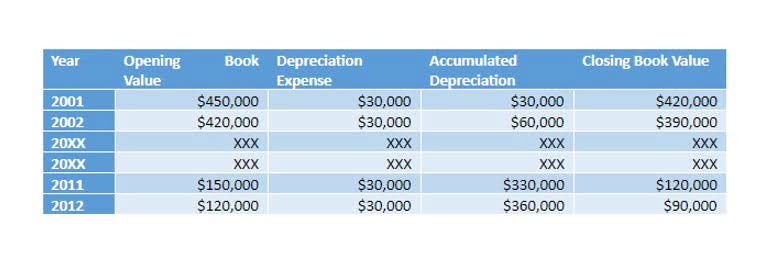
- (The depreciation journal entry includes a debit to Depreciation Expense and a credit to Accumulated Depreciation, a contra asset account).
- The general guidelines and principles, standards and detailed rules, plus industry practices that exist for financial reporting.
- Under the indirect method, the first amount shown is the corporation’s net income (or net earnings) from the income statement.
- This in depth view of equity is best demonstrated in the expanded accounting equation.
Financial Accounting
When a company issues new shares, the revenues generated from the sale of those shares are added directly to equity. This takes place under the line item “issued shares” or “paid-in capital”. Companies opt to take this route particularly when they need to raise funds for growth initiatives but are reluctant to take on more debt. As for prospective investors, this statement fundamentally serves as an indicator of a company’s net value, helping decipher its attractiveness and viability for investment. It facilitates insights into how efficiently the corporation manages its resources, hence playing a decisive role in investment decisions. Gradual growth in shareholders’ equity can showcase the company’s fiscal stability and resilience, making it a viable choice for investment.
Dividends
For example, the SCF for the year 2024 reports the major cash inflows and cash outflows that caused the corporation’s cash and cash equivalents to change between December 31, 2023 and December 31, 2024. The number of shares of common stock is the weighted-average number of common shares that were outstanding during the accounting period. Therefore, if a corporation repurchases some of its shares of stock, the number of shares outstanding will decrease and payroll the earnings per share will likely increase. The gross margin or gross profit percentage is monitored by the readers of the financial statements to determine if the corporation was able to maintain the usual percentage during periods when its product costs had increased. This is important because the corporation’s gross profit amount must be sufficient to cover its selling, general and administrative (SG&A) expenses and to provide a sufficient amount of net income. It also means that expenses and liabilities will be reported on the financial statements when they occur (as opposed to reporting expenses when the corporation remits payment).
What does the statement of shareholder equity include?
This is also true of the $20,000 of cash that was used to repay short-term debt and to purchase treasury stock for $2,000. On the other hand, the borrowing of $60,000 had a favorable or positive effect on the corporation’s cash balance. The net result of the four financing activities caused cash and cash equivalents to increase by $28,000. Cash outflows used to repay debt, to retire Bakery Accounting shares of stock, and/or to pay dividends to stockholders are unfavorable for the corporation’s cash balance. The statement of cash flows highlights the major reasons for the changes in a corporation’s cash and cash equivalents from one balance sheet date to another.
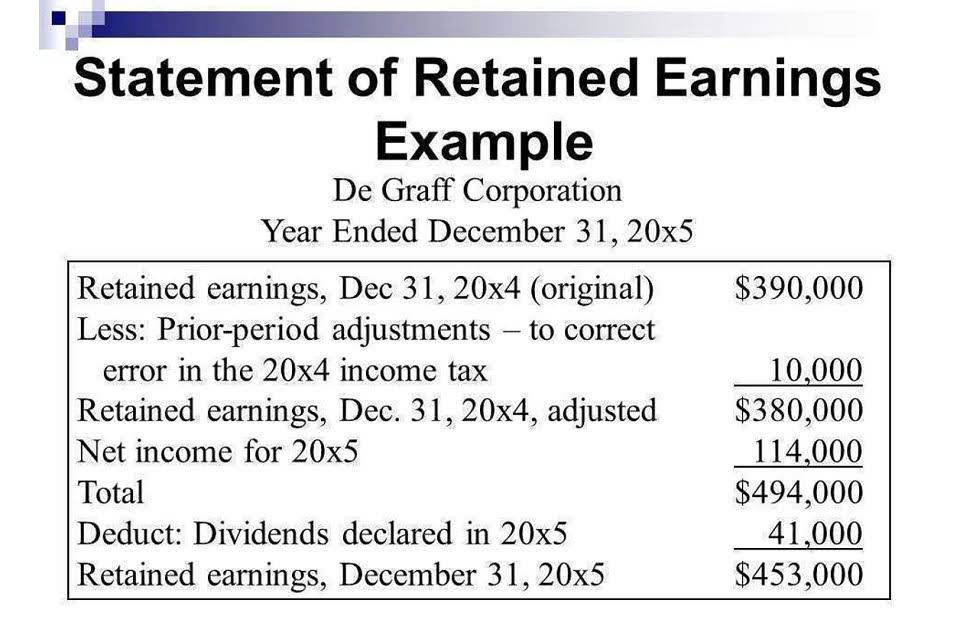
A statement of shareholders’ equity details the changes within the equity section of the balance sheet over a designated period of time. The report provides additional information to readers of the financial statements regarding equity-related activity during a reporting period. The statement is particularly useful for revealing stock sales and repurchases by the reporting entity; a publicly-held company in particular may engage in these activities on an ongoing basis.
Goodwill is a long-term (or noncurrent) asset categorized as an intangible asset. The amount of goodwill is the cost to purchase the business minus the fair market value of the tangible assets, the intangible assets that can be identified, and the liabilities obtained in the purchase. Cost of goods sold is usually the largest expense on the income statement of a company selling products or goods. Cost of Goods Sold is a general ledger account under the perpetual inventory system. The current asset that represents the amount of interest revenue that was reported as earned, but has not yet been received. The positive amounts in this section of the SCF indicate the cash inflows or proceeds from the sale of property, plant and equipment and/or other long-term assets.

Cost of Equity

Hence the amounts may not be relevant for future decisions and will not indicate the corporation’s fair market value. First, the changes to common stock are reported as zero, in millions, which means there could have been $499,999.99 of stock issued left off this report because it is immaterial. The $89 million (rounded to the nearest million) in stock would equate to 1.78 billion shares (actually reported on the balance sheet at 1.782 billion). Beyond mere trend analysis, financial ratios derived from the shareholders equity statement help evaluate the company’s financial soundness and efficiency. When a company earns income, this increases equity, much like retained earnings. The difference is that net income has not been allocated yet; it could go into retained earnings (if it isn’t distributed as dividends) or it might be distributed to shareholders.
When you join PRO Plus, you will receive lifetime access to all of our premium materials, as well as 14 different Certificates of Achievement. Note that near the bottom of the SCF there is a reconciliation of the cash and cash equivalents between the beginning and the end of the year. Some U.S. corporations have a fiscal year that is based on weeks instead of months.
Leave a Reply
Want to join the discussion?Feel free to contribute!